Music Curriculum Information
Intent:
At Tower Hill Primary School, our core vision is that ALL children will be equipped with the skills, knowledge, understanding and empathy that will lead to them being able to make their own choices in life, successfully. We truly believe that music has the power to change lives. Music creates social connection, promotes health and wellbeing, improves confidence and resilience, and provides opportunities for children, young people and adults to express themselves and explore their creativity. The primary intent of our Music curriculum is to provide our children with the knowledge, skills and experiences they need to become confident listeners, composers and performers and develop a life-long love of music.
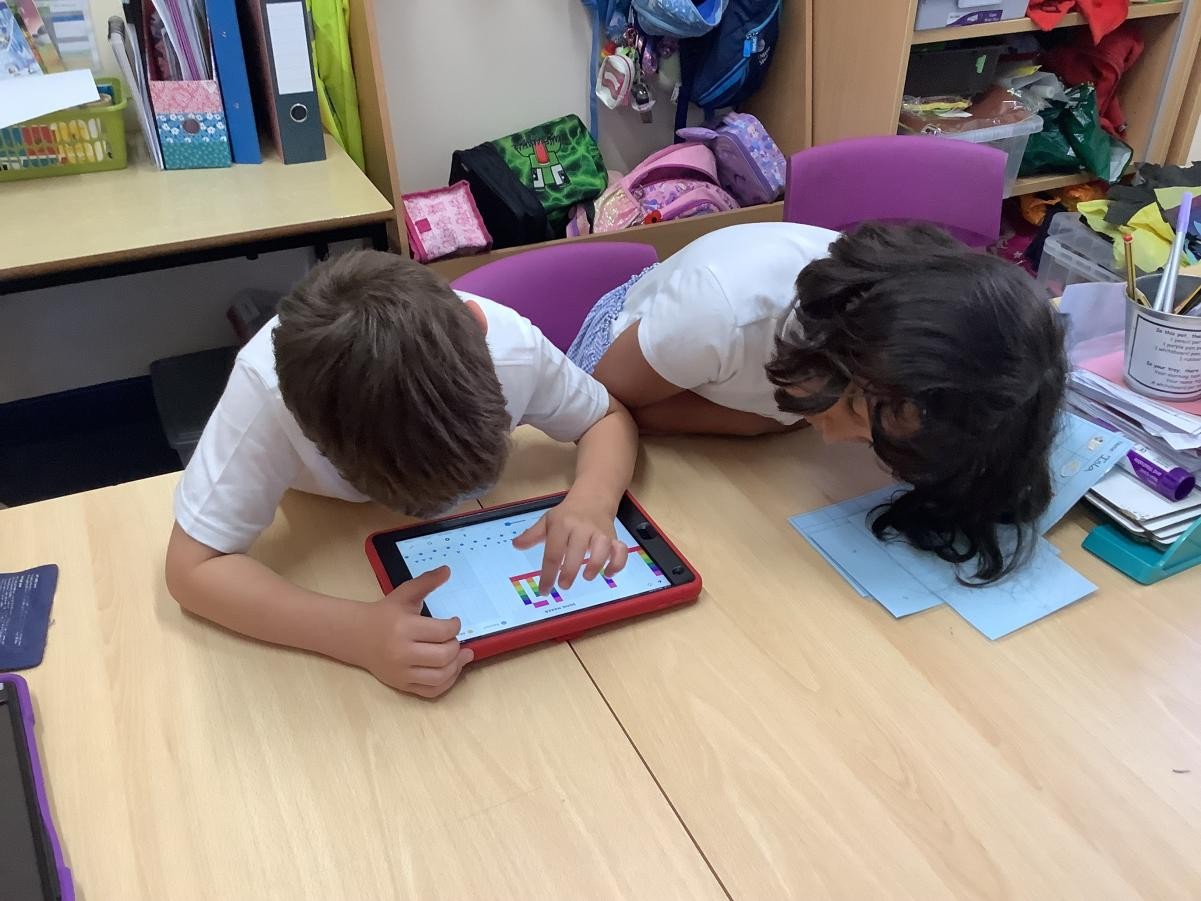
We have designed our Music curriculum so that our children build a strong foundation in musical understanding. From the EYFS onwards, children learn to listen attentively, analyse what they hear, create sound and music, read and write musical notation and understand the history of music. They experience music from around the world and across generations, developing Cultural Capital as well appreciation for other cultures and communities. Children in KSII learn music technology, opening the door to composition, song writing, recording music production and many other music making chances and careers.
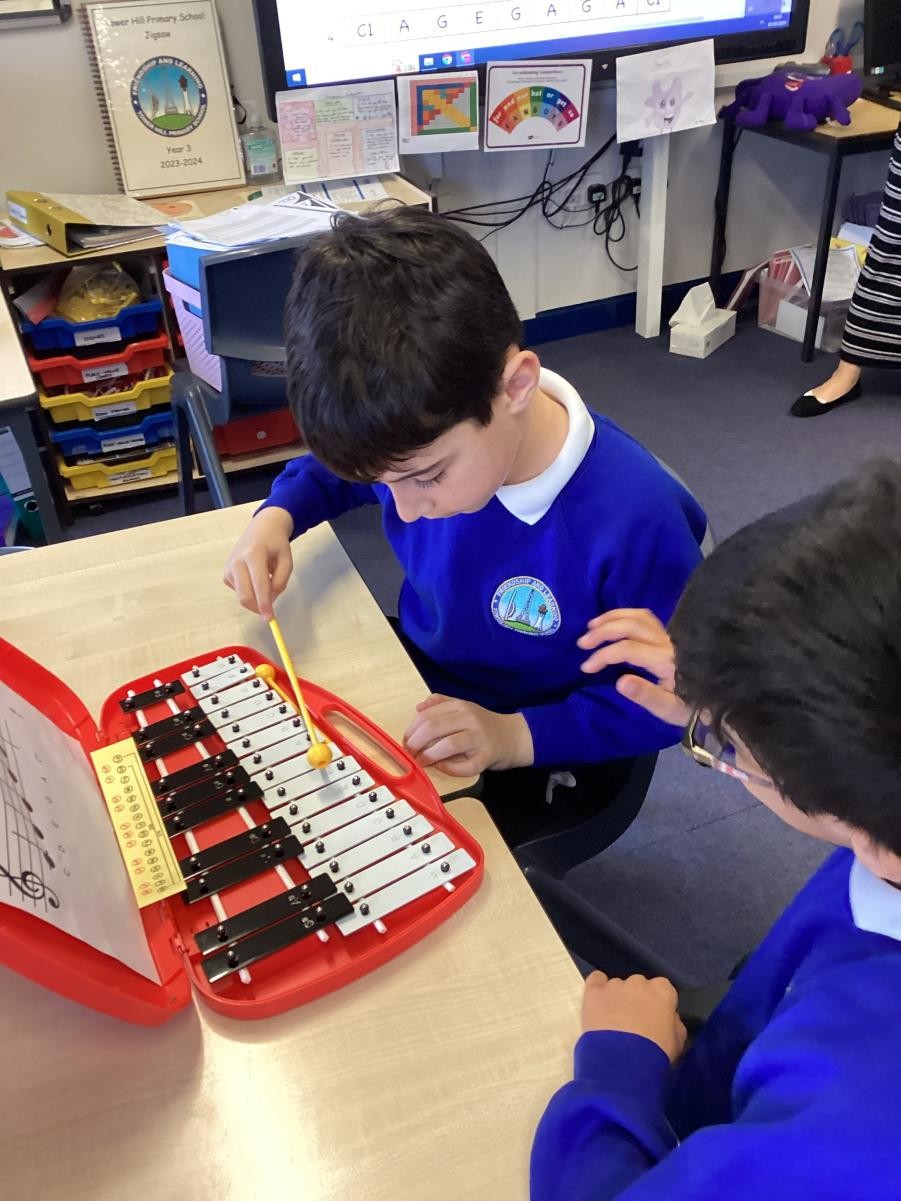
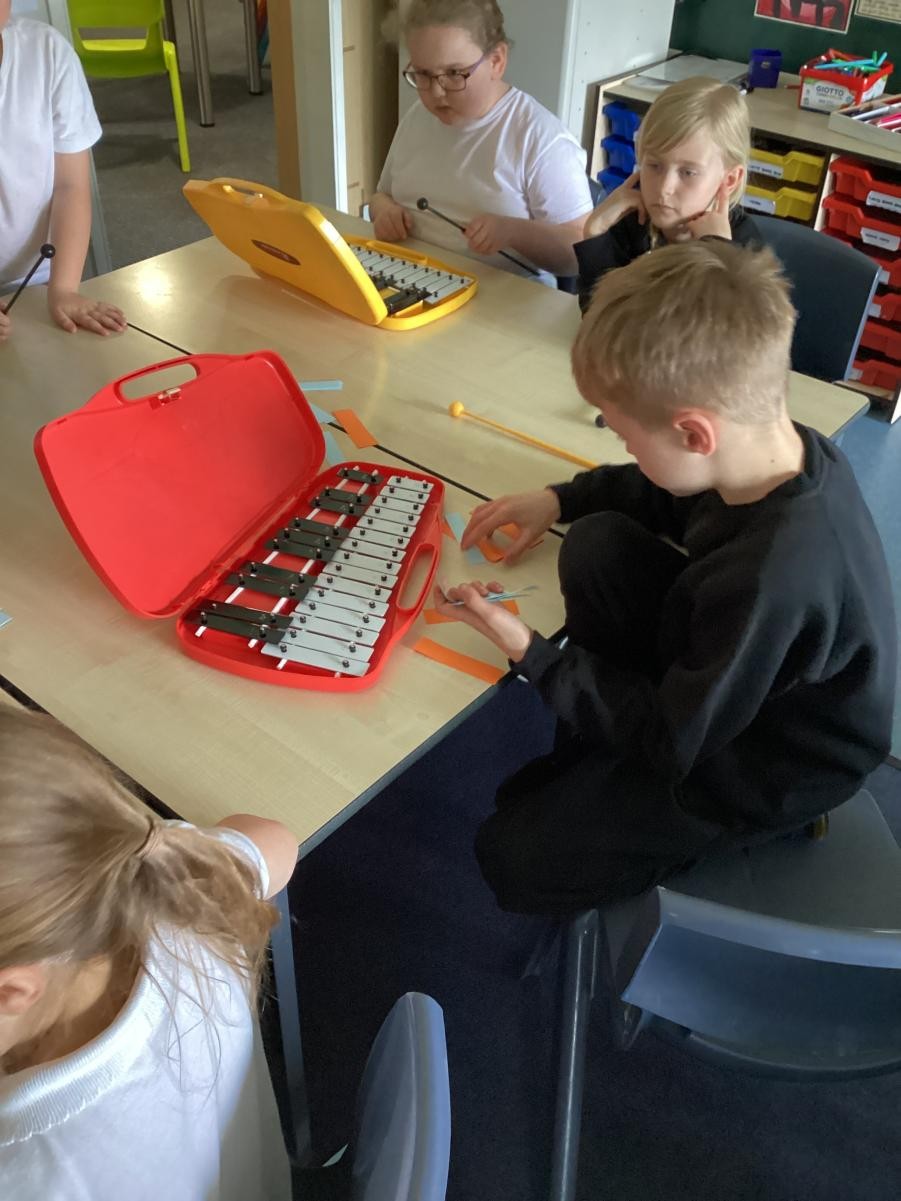
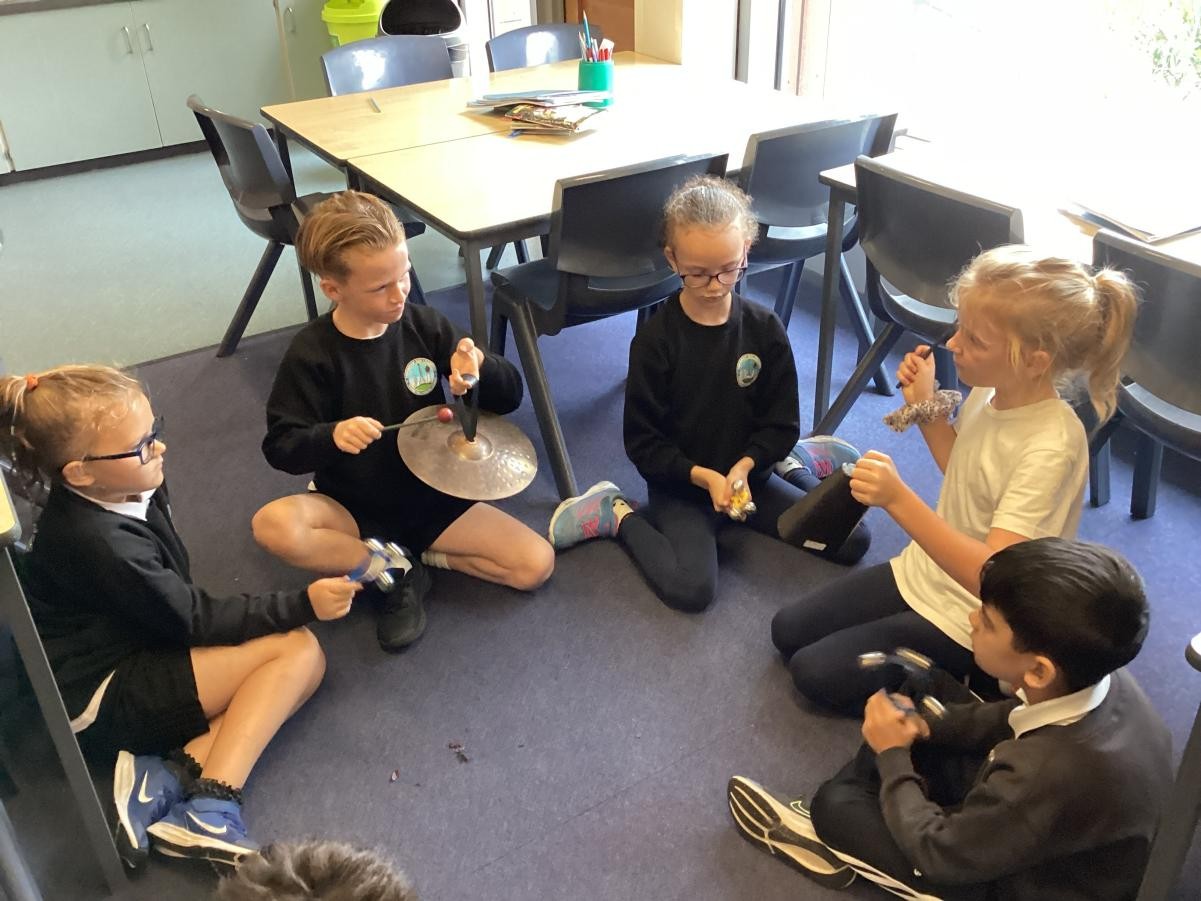
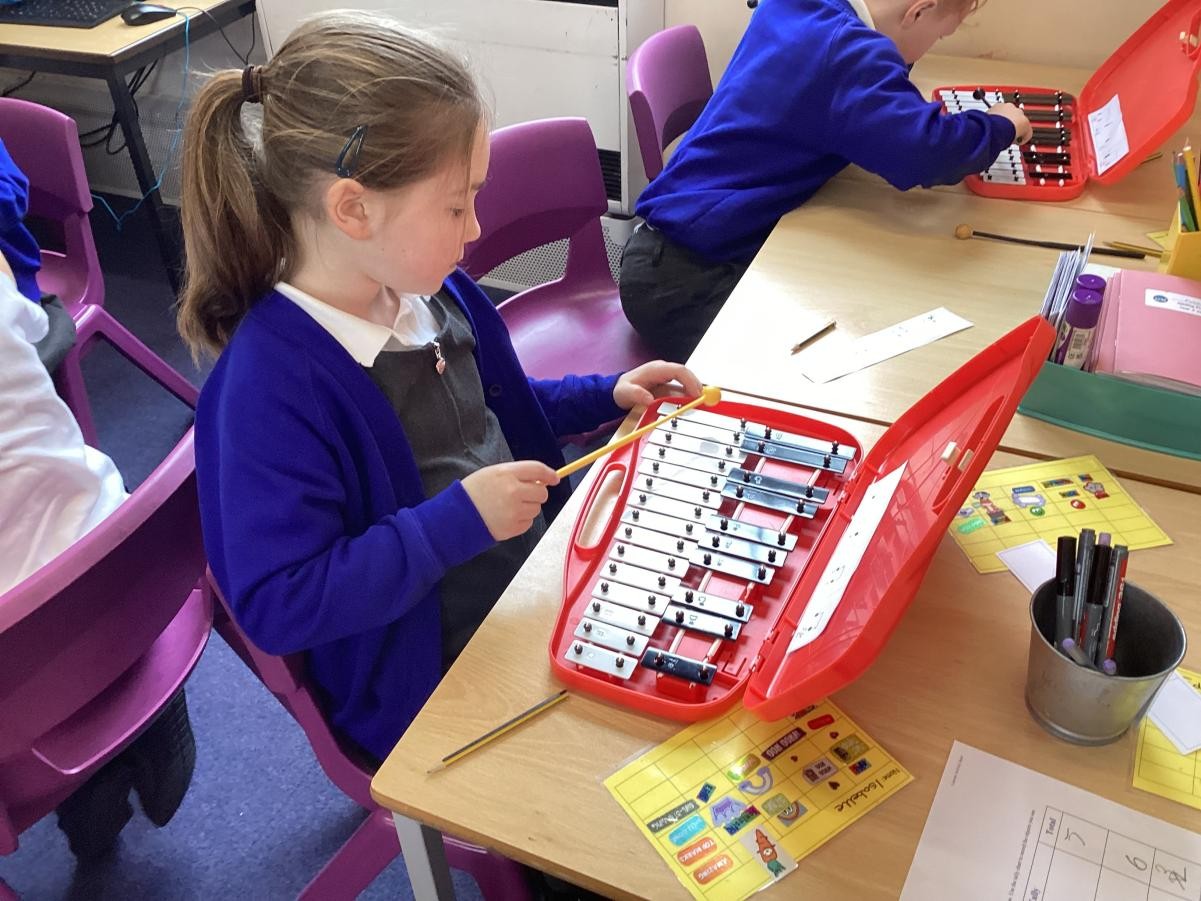
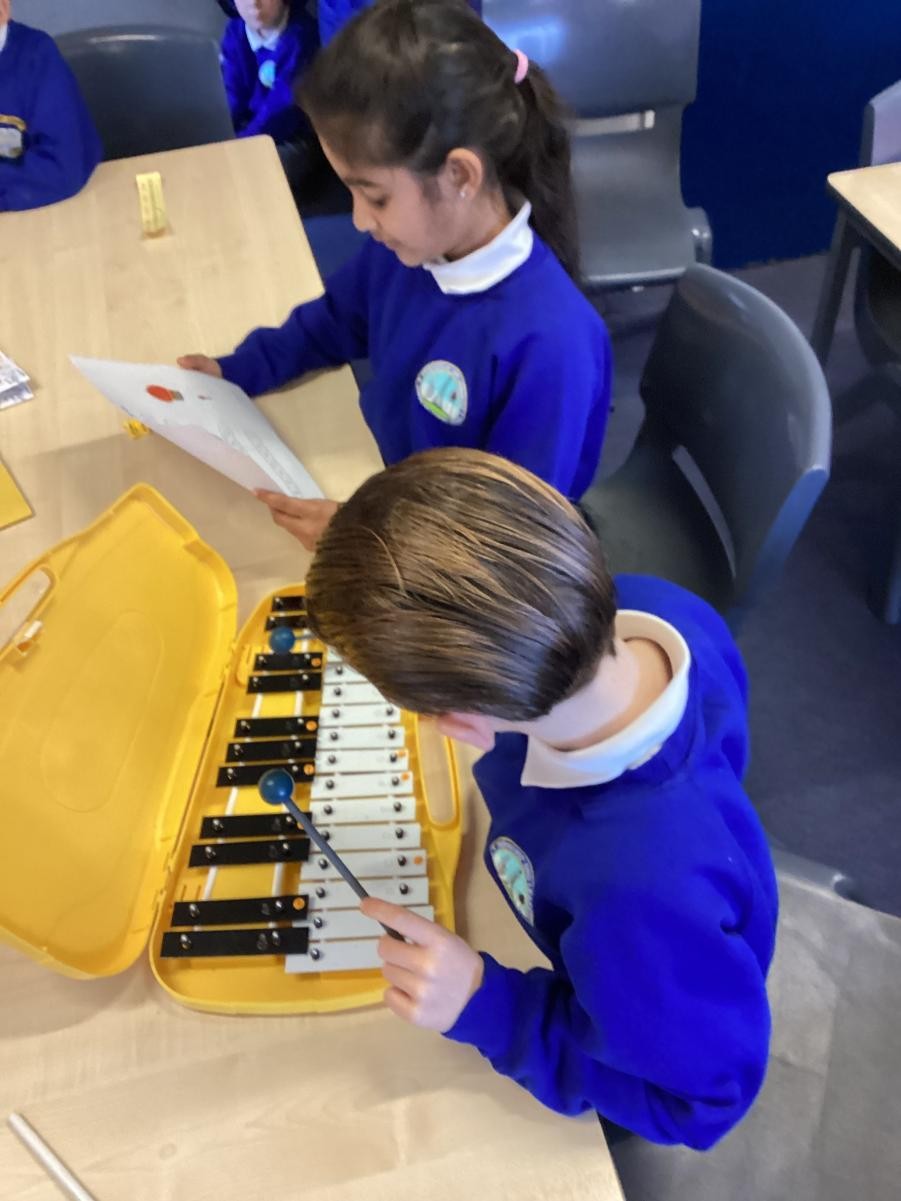
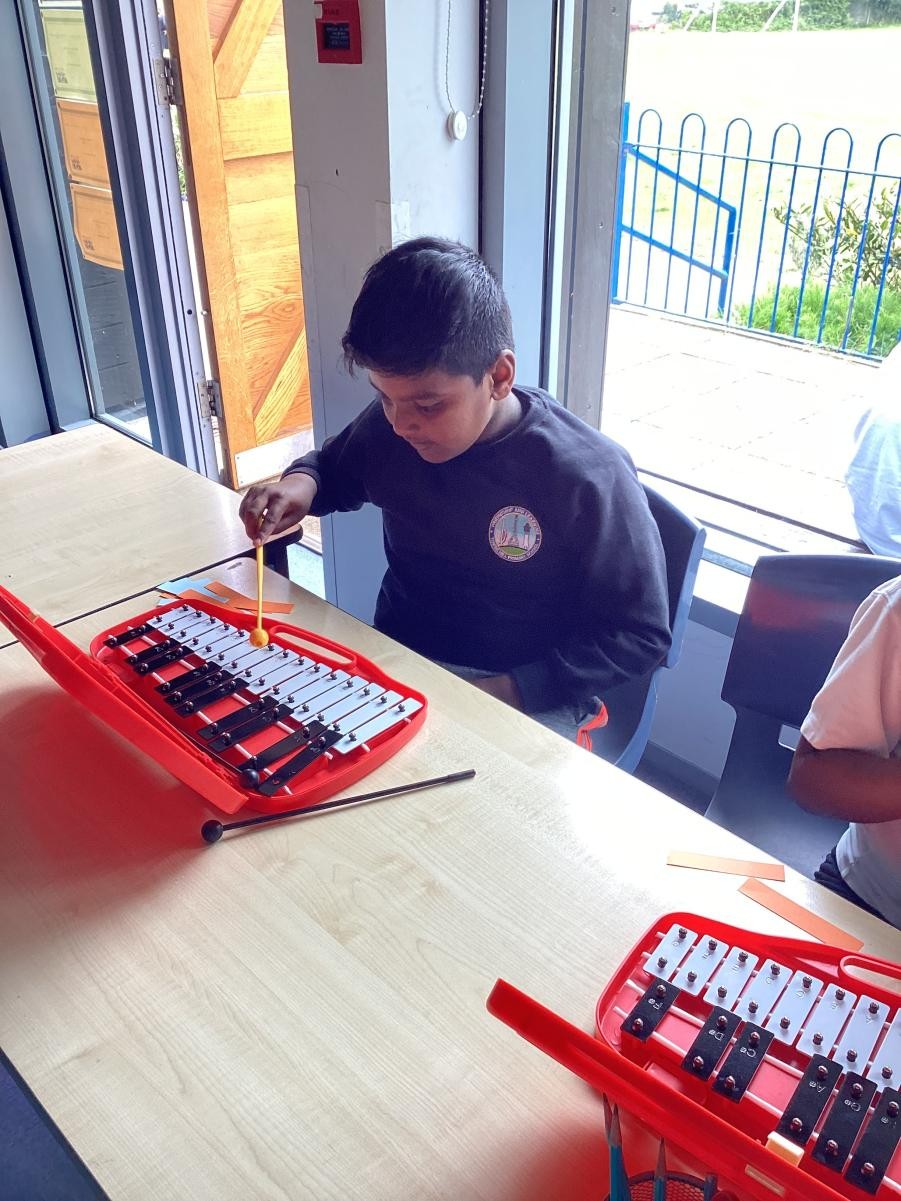
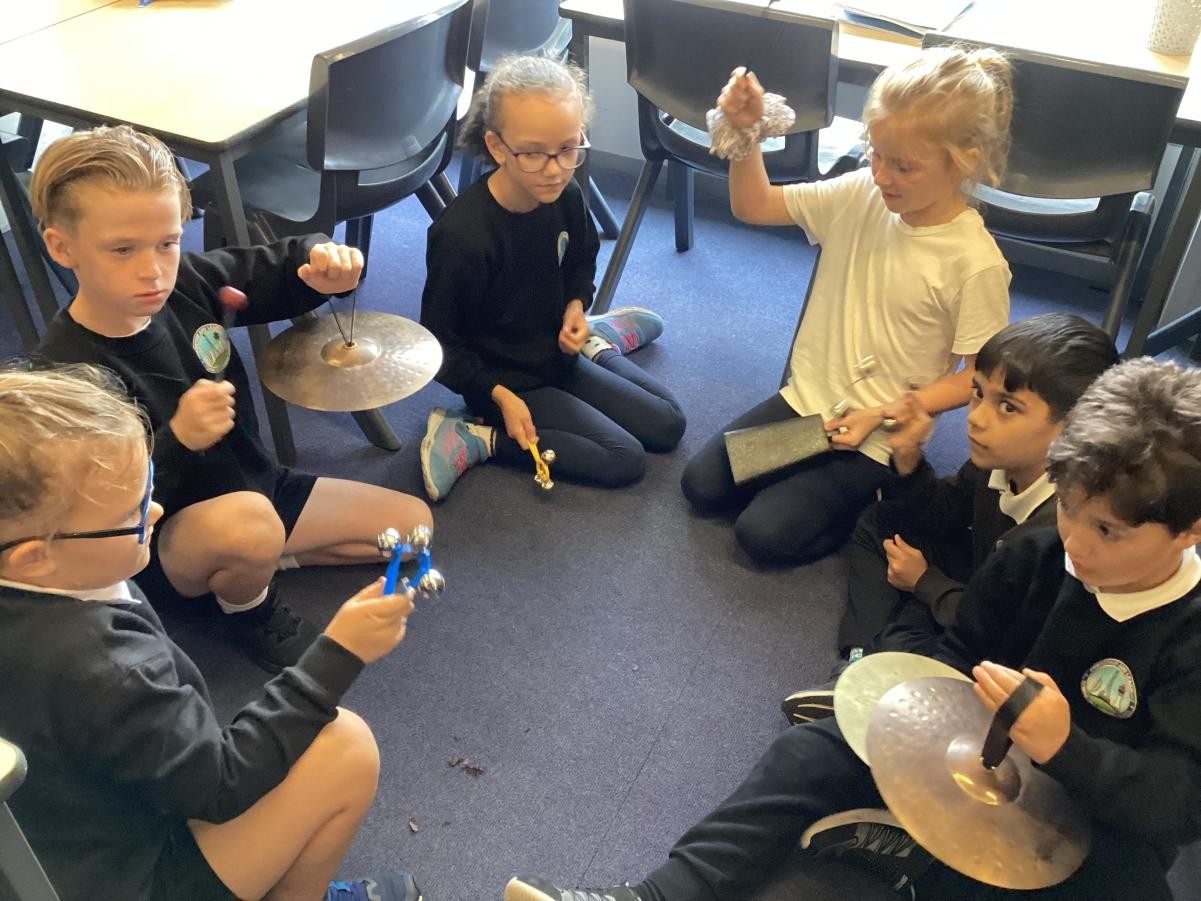
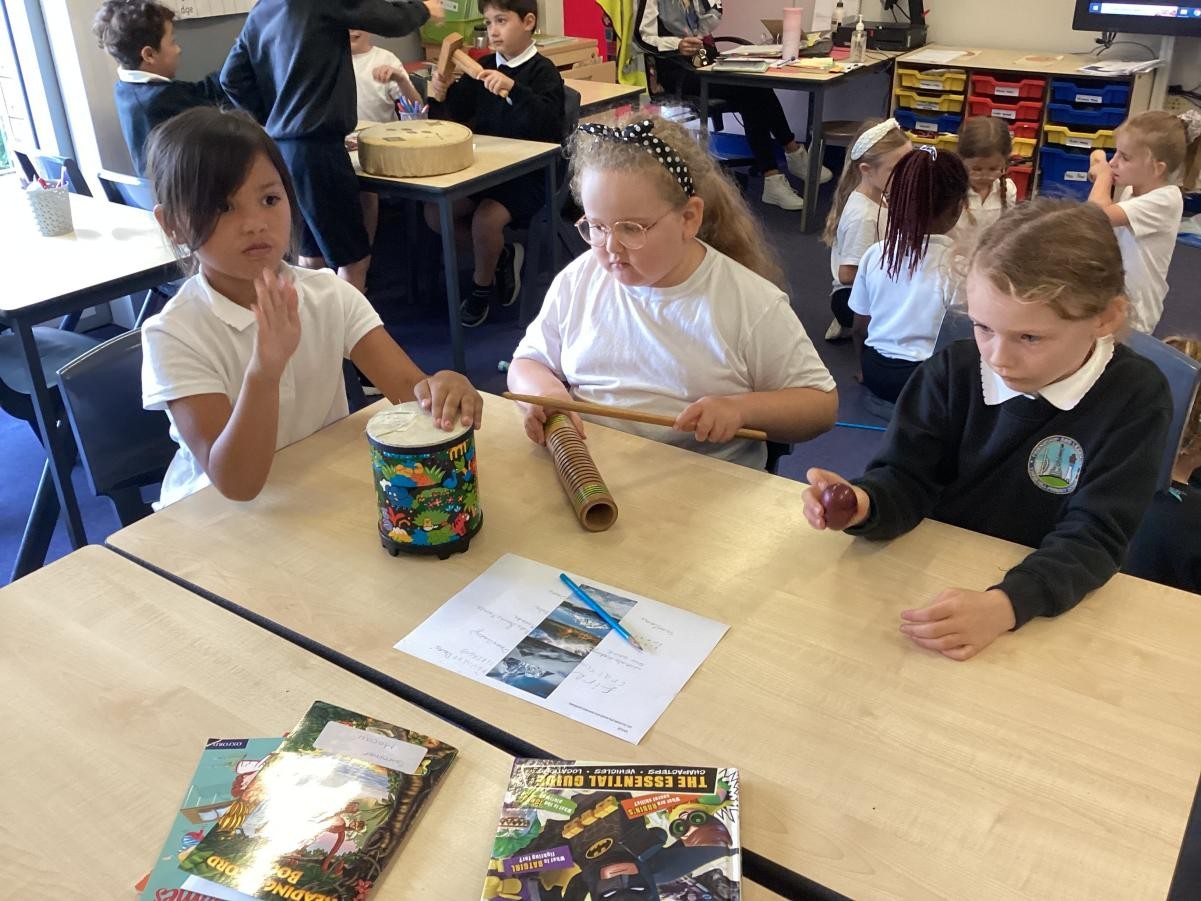
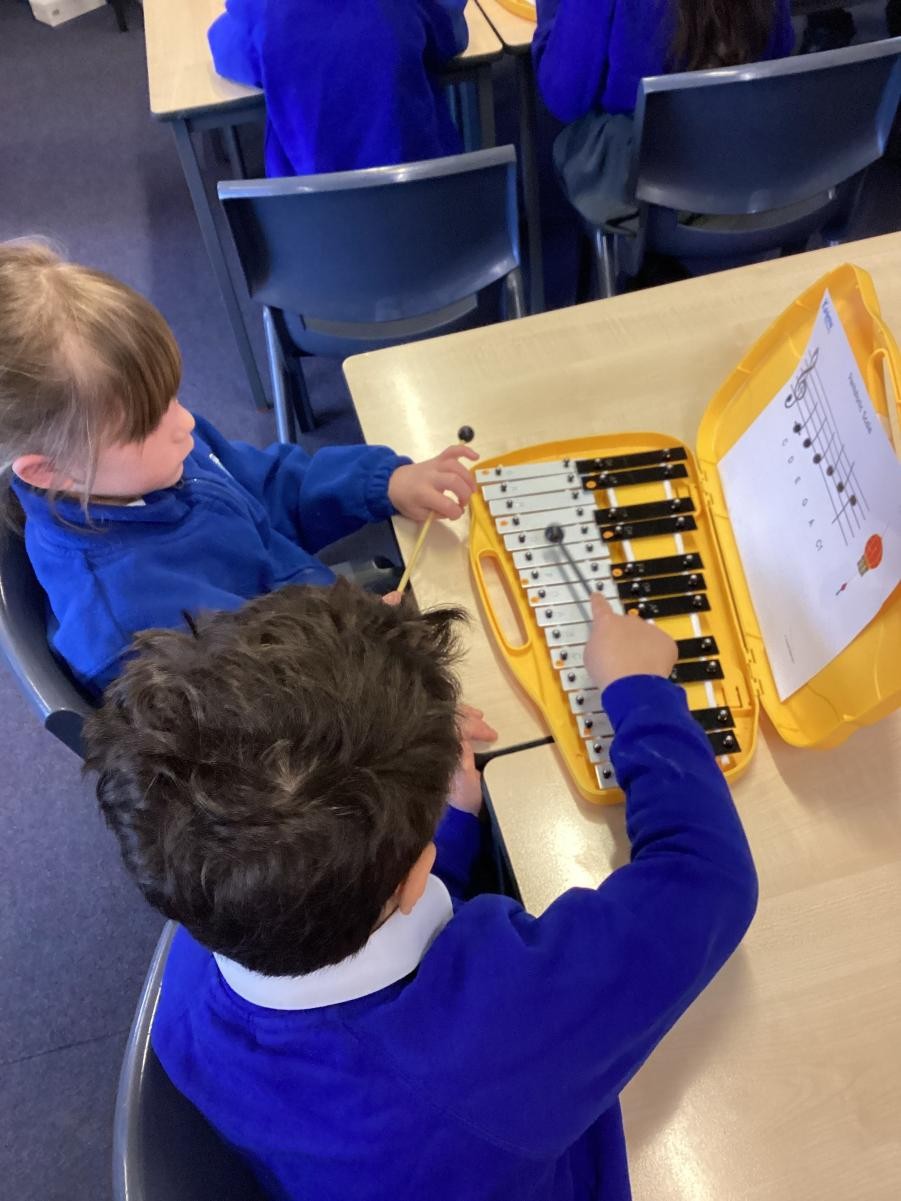
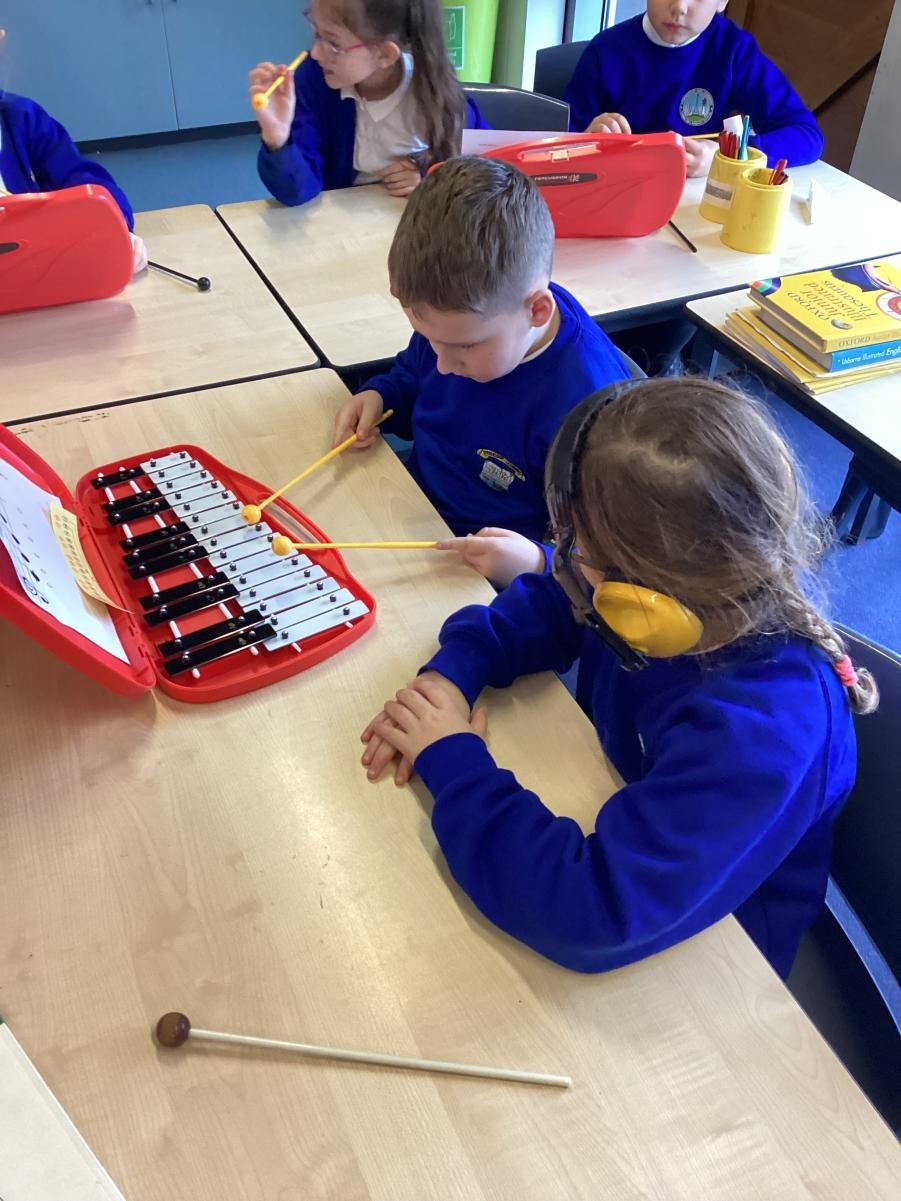
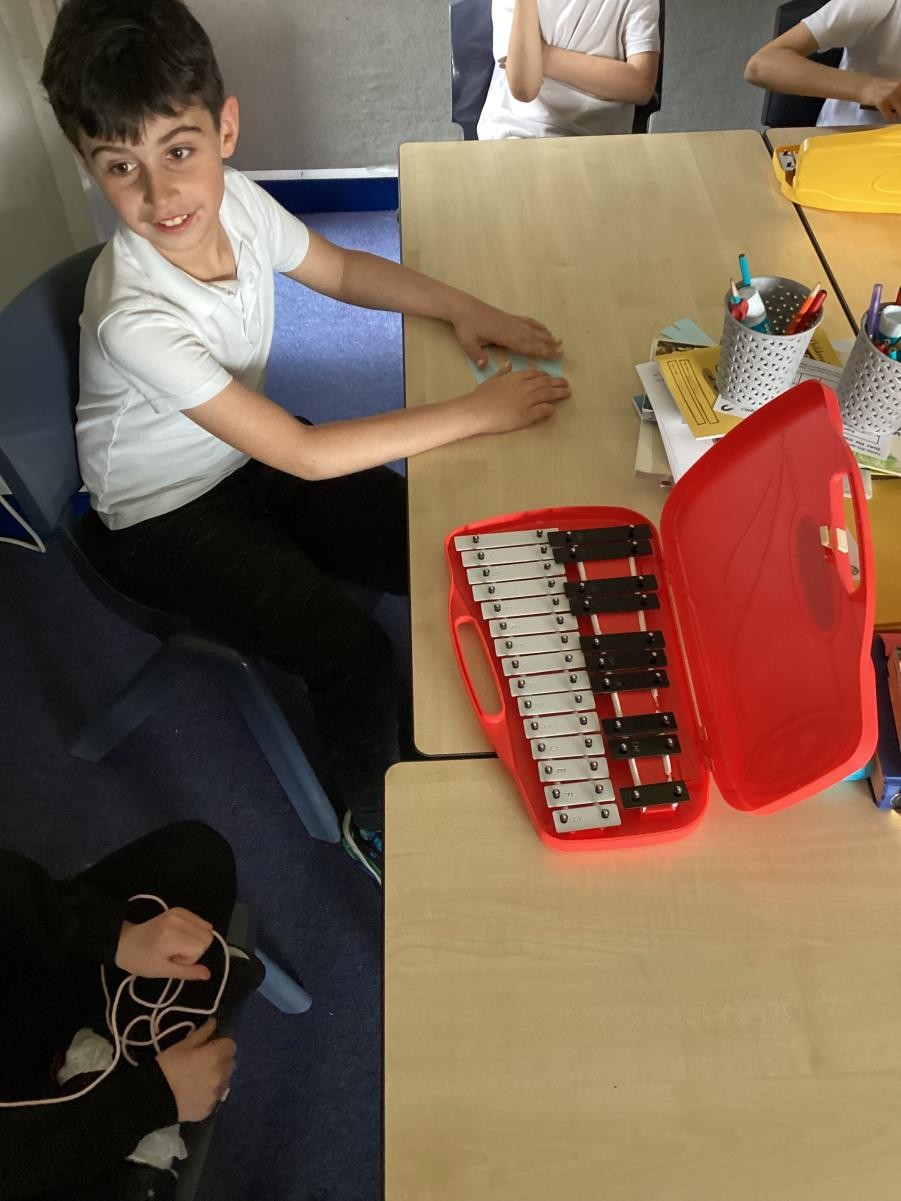
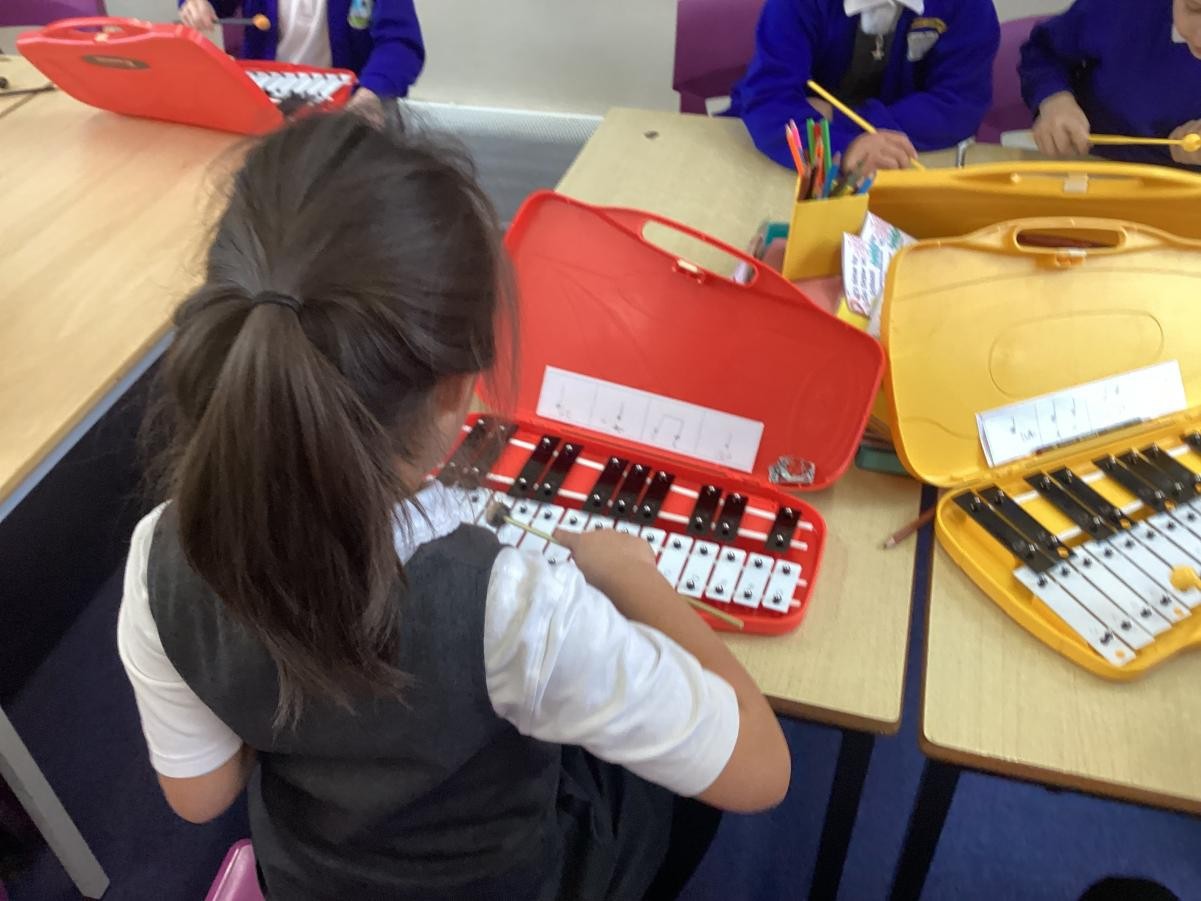
All children learn to sing, play instruments and create music together and have the opportunity to develop their musical interests and talents. Singing is a fundamental part of our school life and children sing daily in music lessons, in key-stage-specific singing assembles and across the wider curriculum. Every child is taught to play two musical instruments, incrementally developing their skills so that they become better musicians. We create a supportive environment for children to build confidence in performing in front of an audience, both at school and in the wider community.
We recognise that music belongs to everyone. With that in mind, our diverse and inclusive Music curriculum aims to break down barriers for leaning for children with SEND and those from disadvantaged backgrounds, for example by utilising music technology and increasing access to instrumental tuition and live performances. We strive for all to be actively engaged in their own learning, to be motivated and eager, and to achieve and attain to their own full potential in Music.
Implementation:
At Tower Hill we follow a bespoke Music curriculum which incorporates:
- the condensed scheme of work from Kapow (2026 onwards)
- supplementary KSII music technology units of work
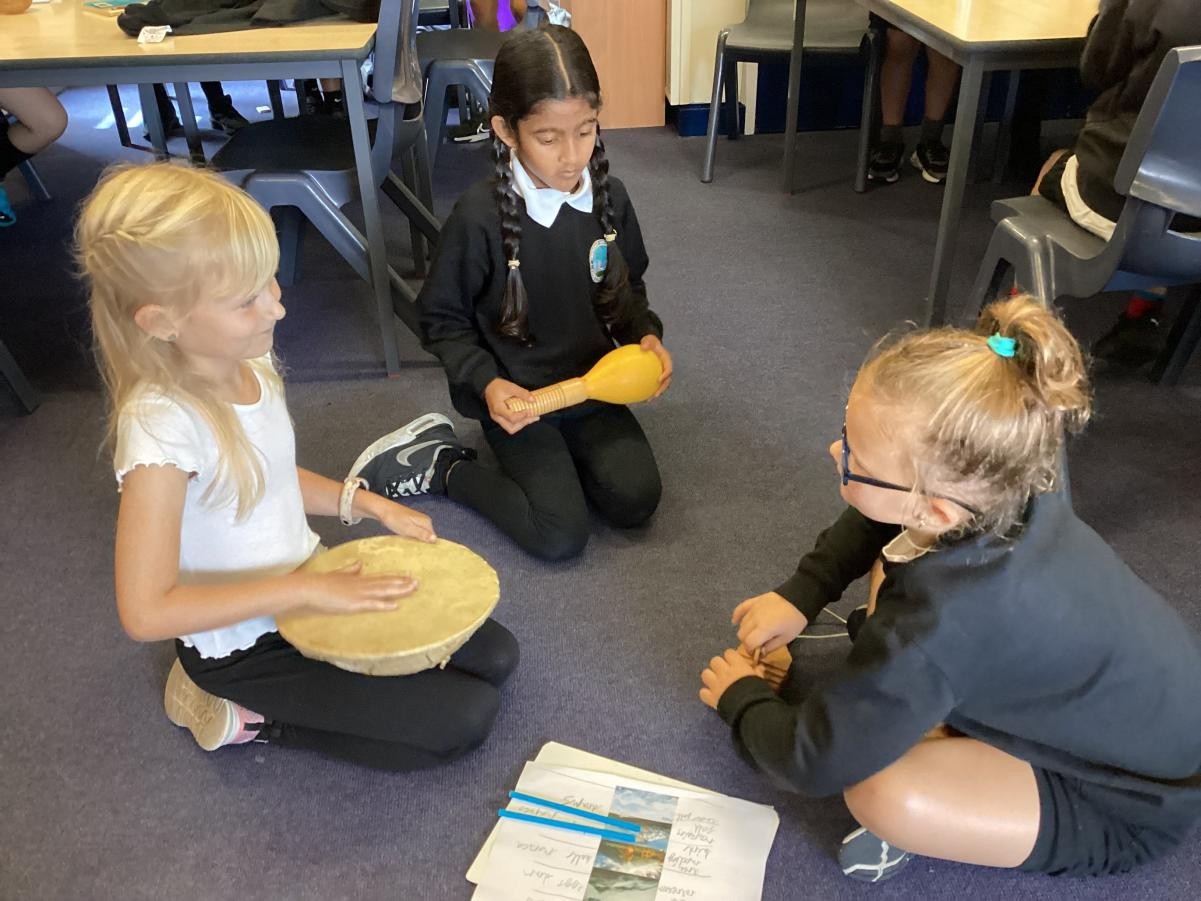
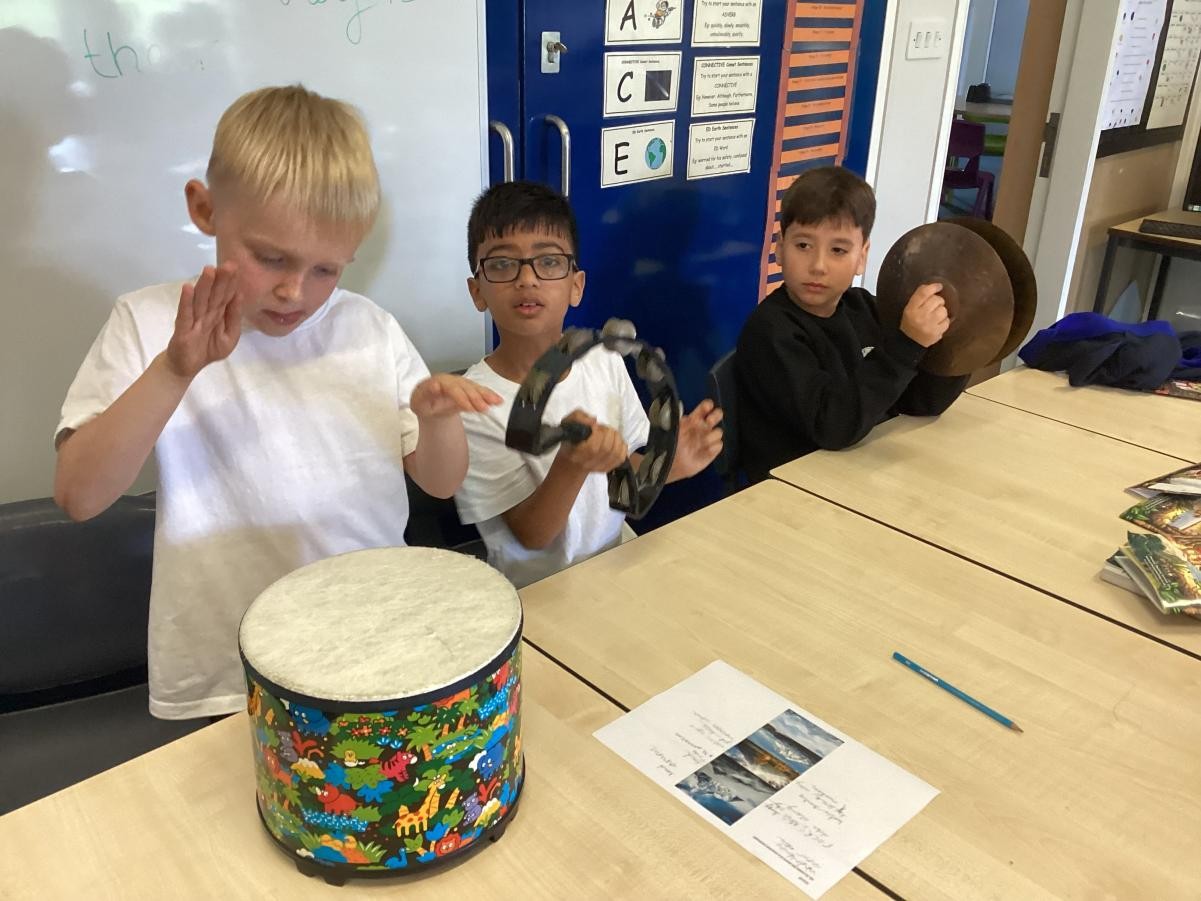
- whole class instrumental lessons for all year groups (African drumming and/or Ukulele)
Our Music curriculum is purposeful and relevant to our children and is carefully planned and sequenced to enable ALL children (including those with SEND and those from disadvantaged backgrounds) to progress. It is underpinned by the five strands of music, with a focus on listening, composing and performing as well as the inter-related dimensions of music. Key musical skills, knowledge and vocabulary are introduced at the beginning of each phase and then revisited with increasing complexity to allow children to consolidate and build on their previous learning. Singing and instrumental units of work are intentionally structured so that children learn to sing and play instruments with greater fluency, expression, accuracy and control as they move from EYFS to Year 6. Teachers also have access to Sing Up and the Tower Hill Music Spine to supplement the classroom Music curriculum.
Early Years Foundation Stage:
The Early Learning Goals for Being Imaginative and Expressive state: Children sing a range of well-known nursery rhymes and songs and Children perform songs, rhymes, poems and stories with others and – when appropriate – try to move in time with music.
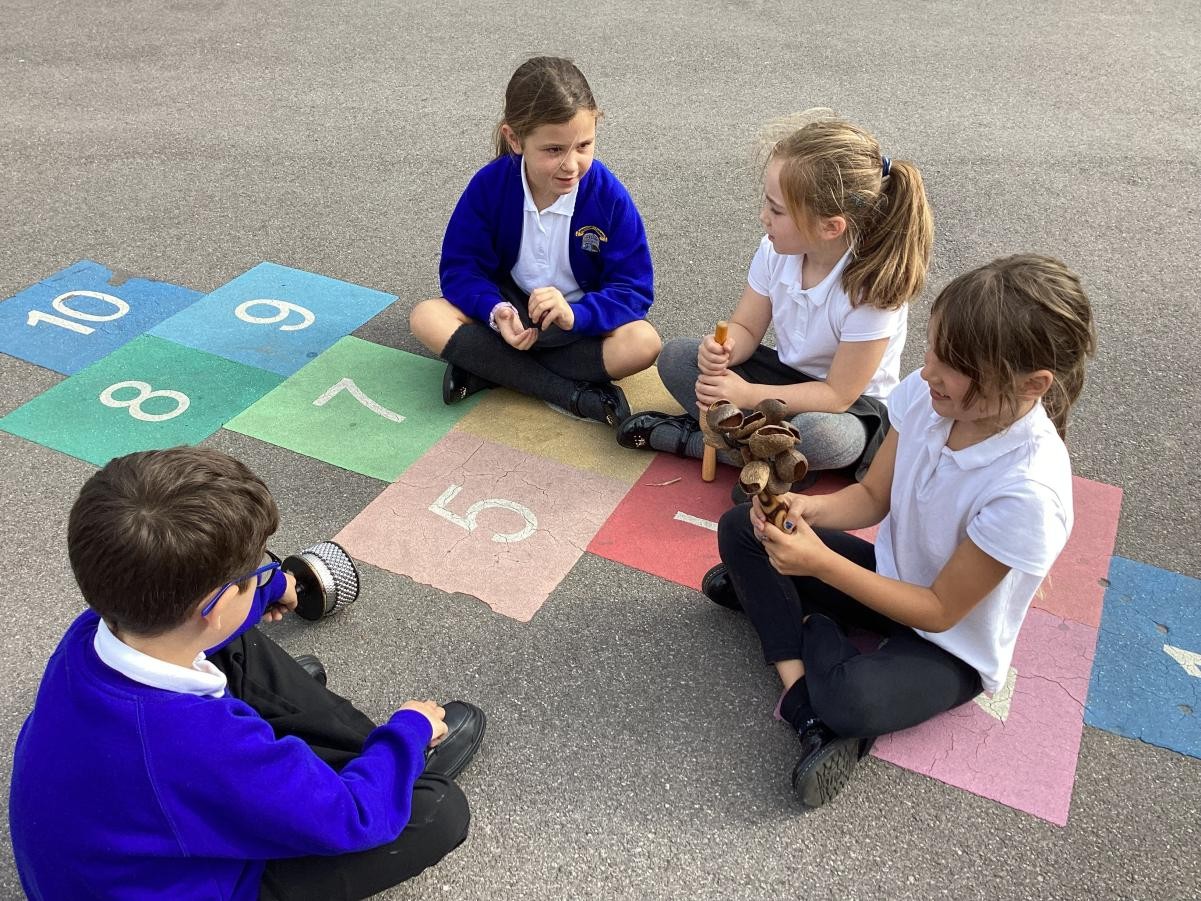
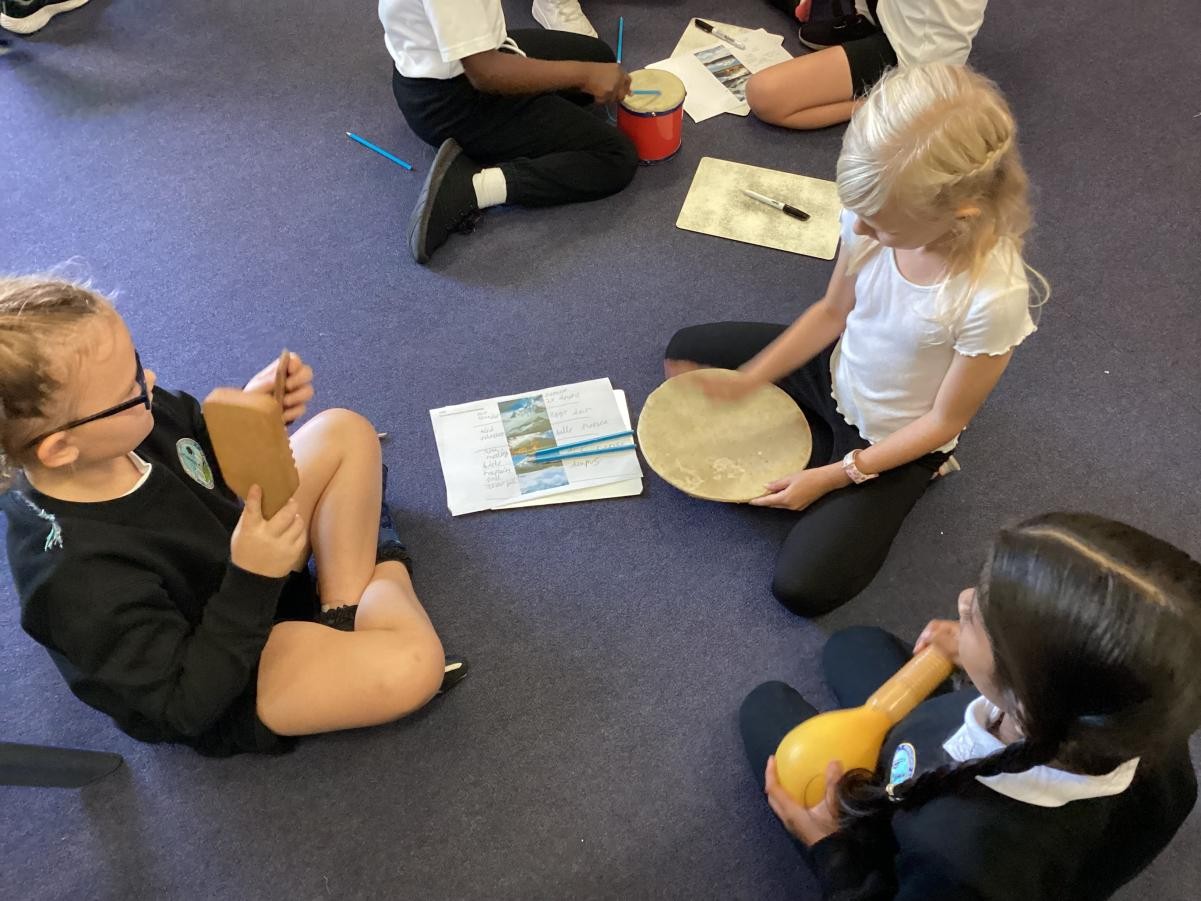
- In EYFS, the children begin their musical journey by becoming familiar with a range of well-known and lesser-known nursery rhymes, creating their own actions to accompany songs. They have regular opportunities to perform songs and rhymes to audiences of their classmates and familiar adults, including Harvest Assembly, the Nativity and the Easter Bonnet Parade. Through the unit Exploring Sound, EYFS children explore how to use their voices and bodies to make sounds, and experiment with tempo and dynamics when playing sound makers and instruments. They express feelings and emotions through movement to music in the unit Music and Movement. Children in the EYFS are also introduced to African drumming, listening to and copying the pulse and simple rhythms.
Key Stage I:
The National Curriculum states that in KSI: Pupils should be taught to use their voices expressively and creatively by singing songs, play tuned and untuned instruments, listen with concentration and understanding, and experiment with create, select and combine sounds to create their own compositions.
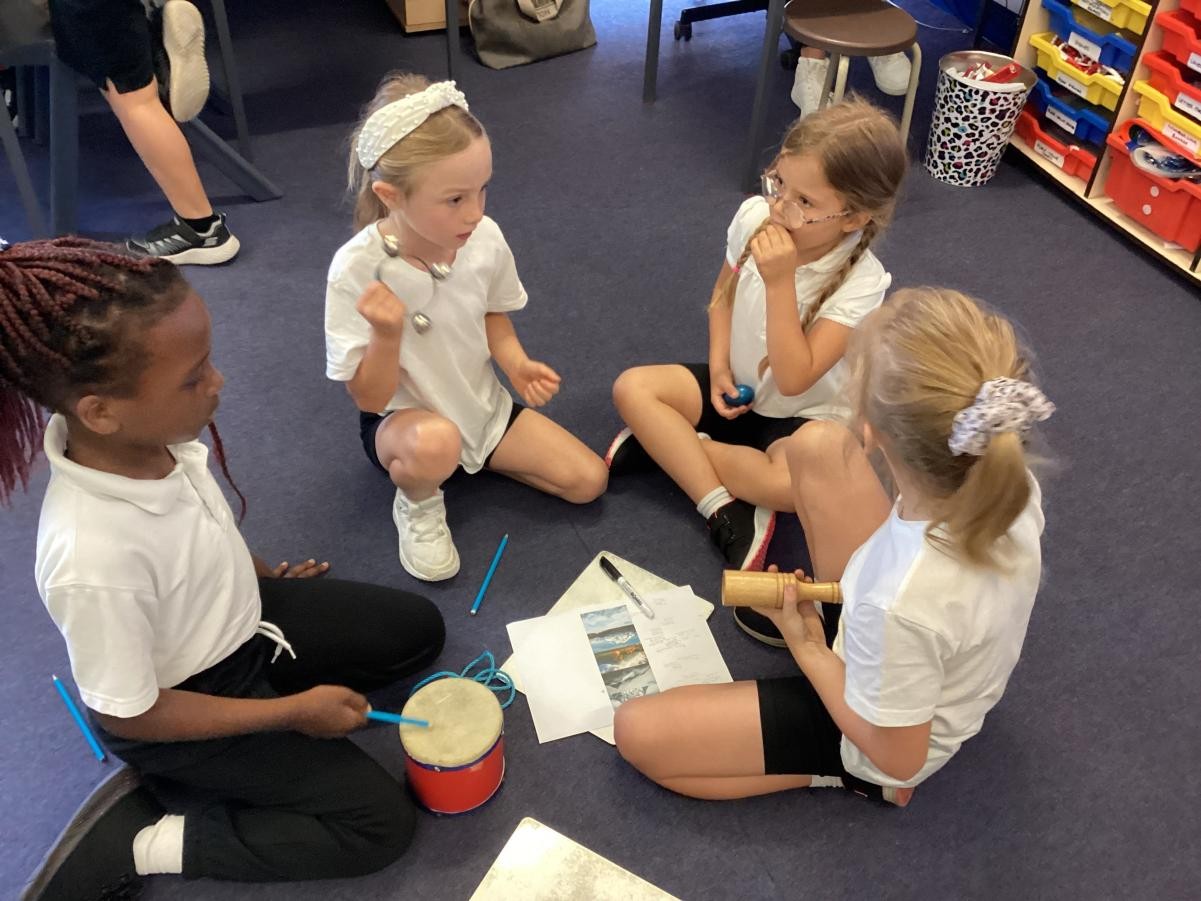
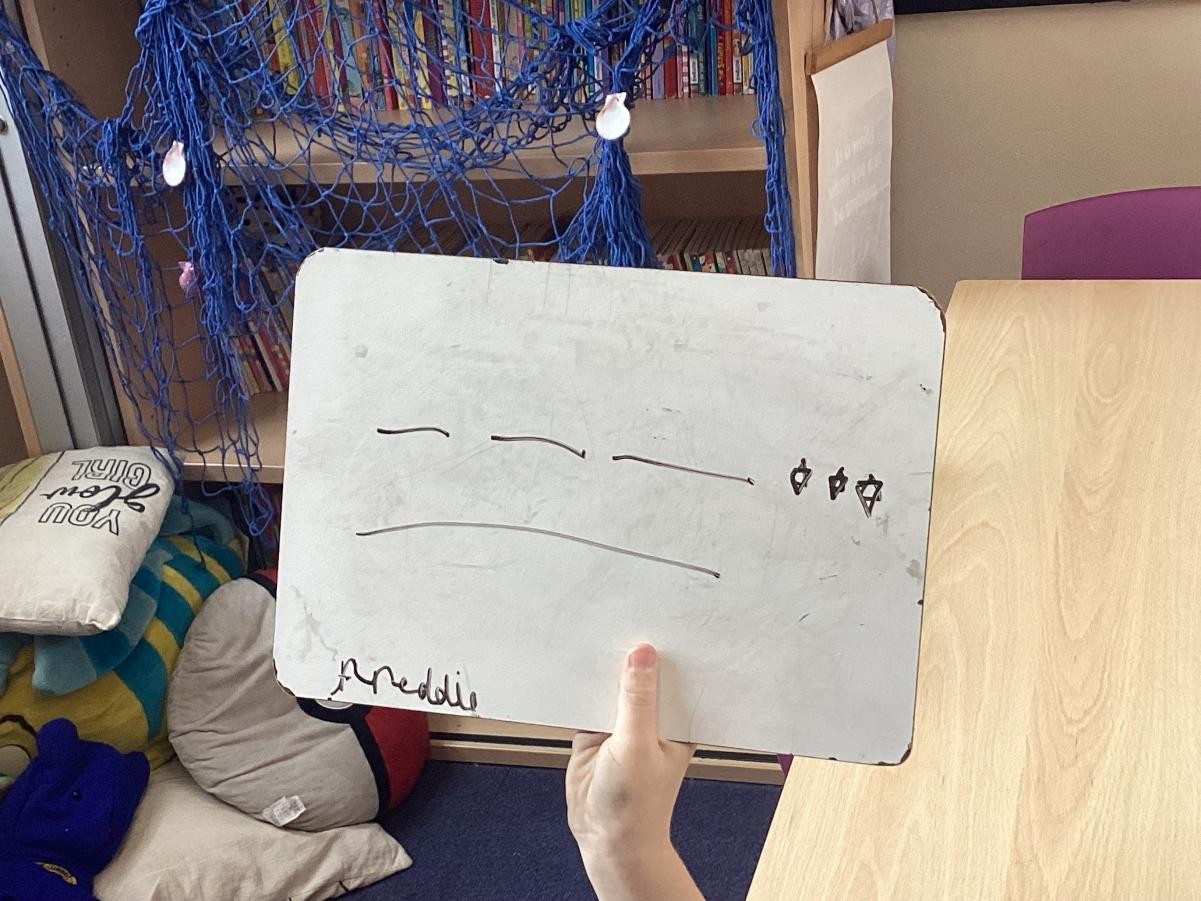
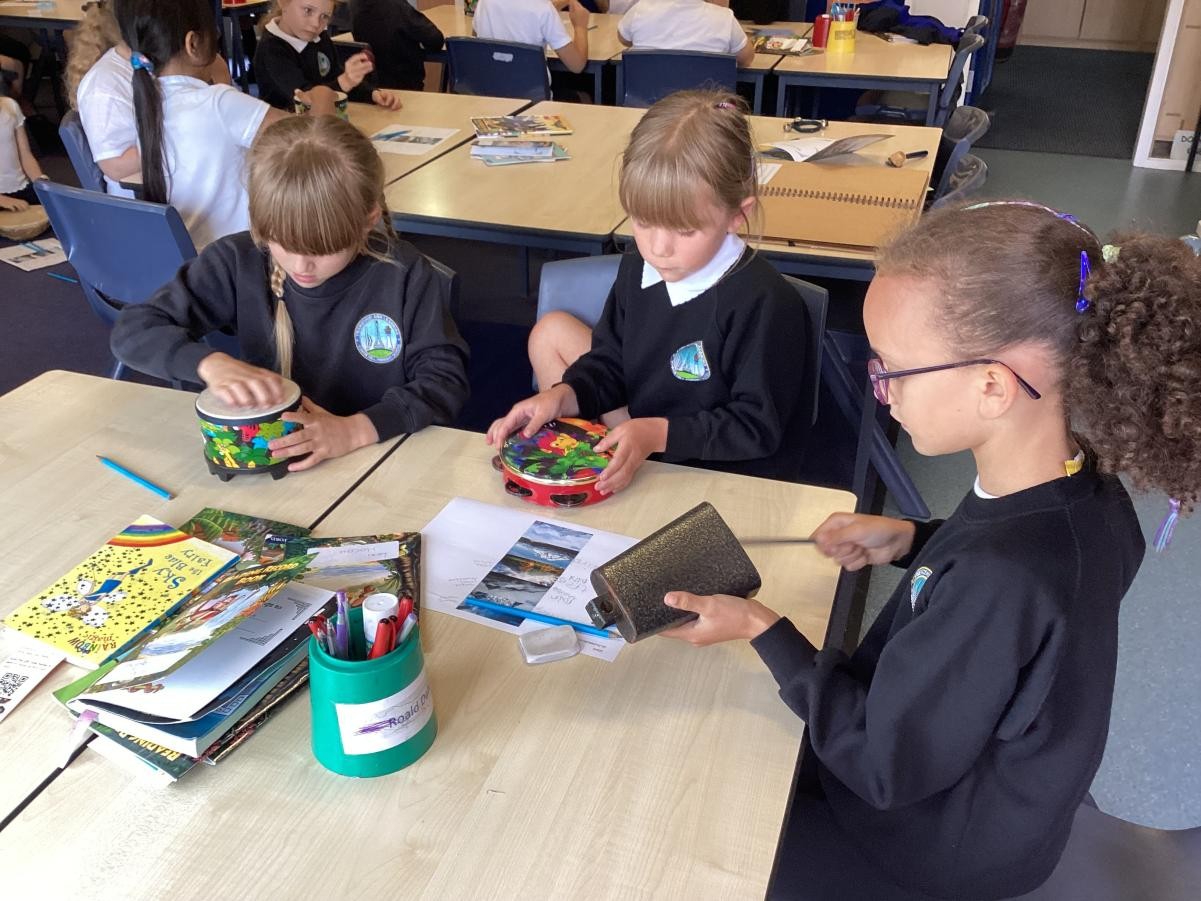
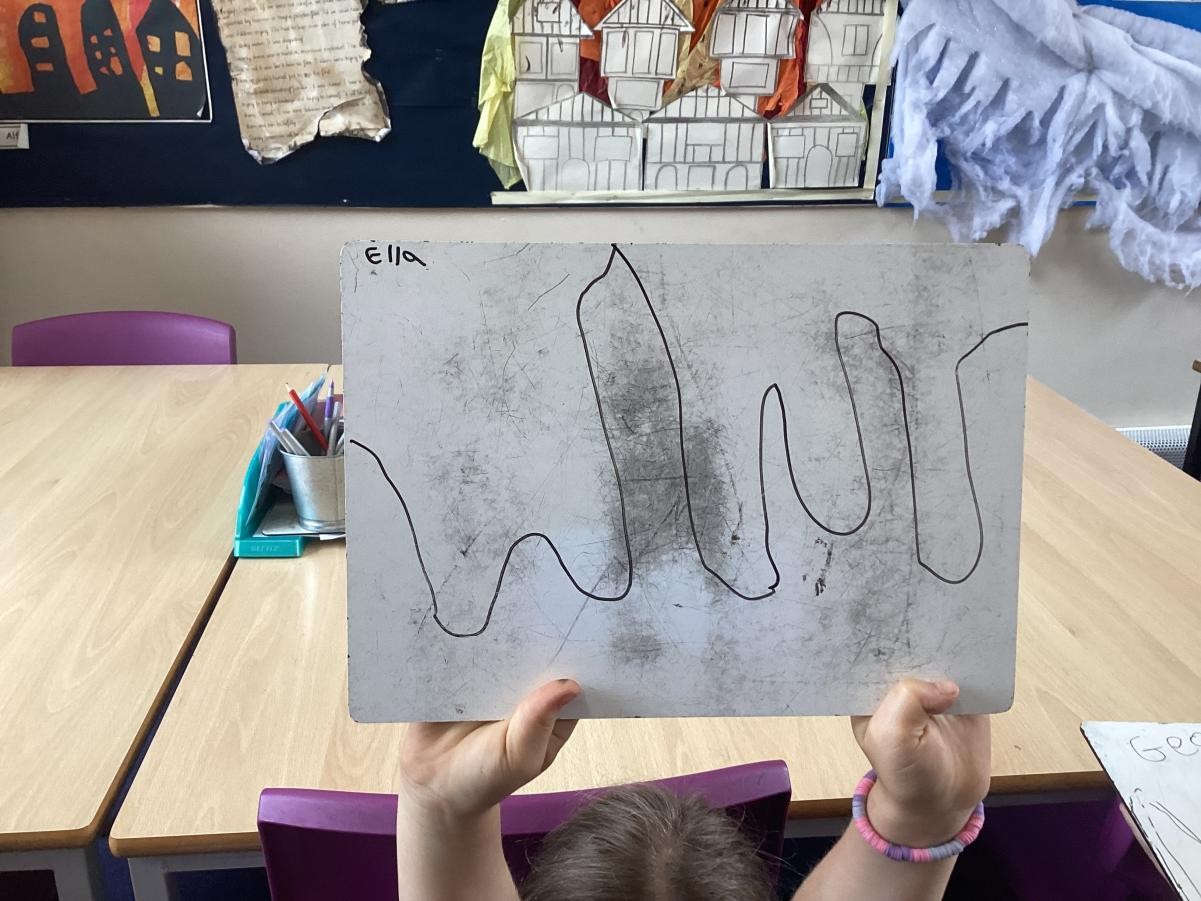
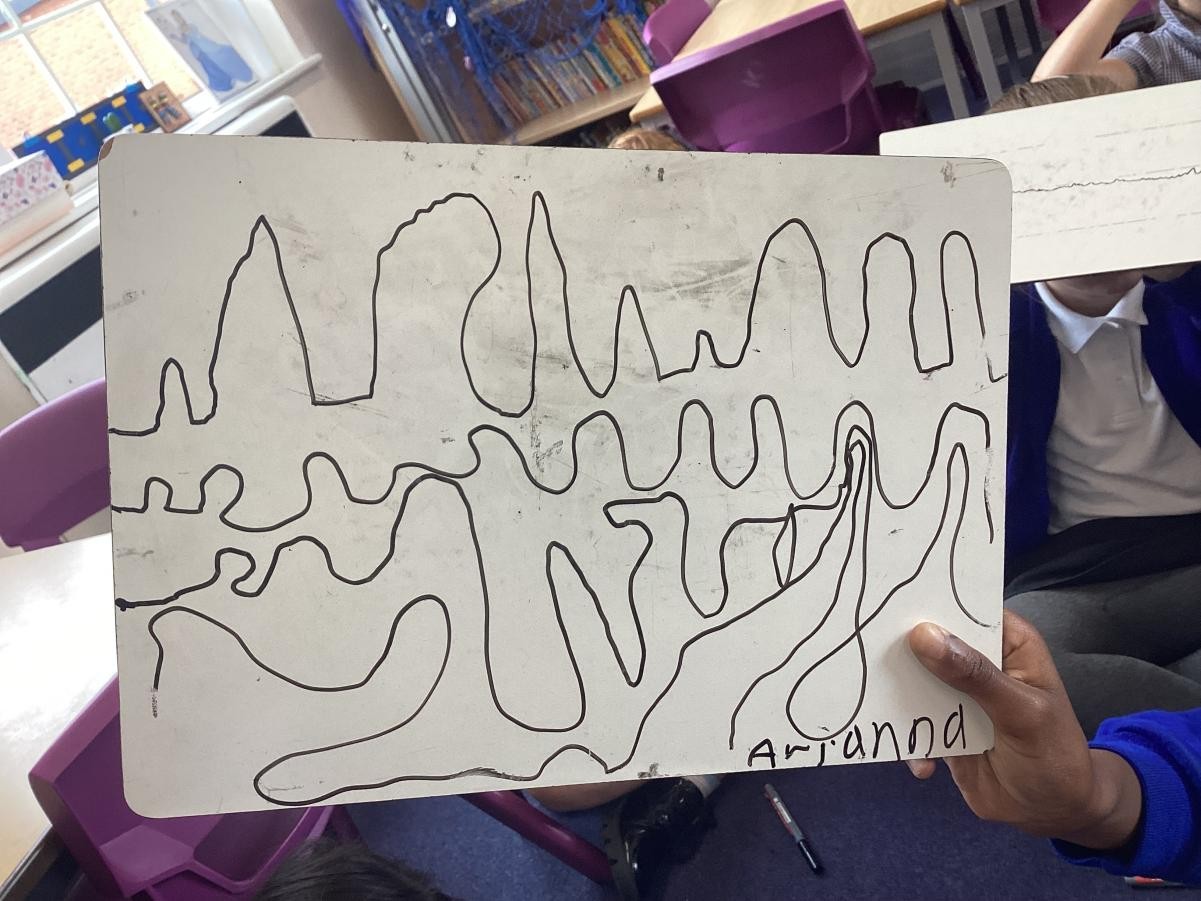
- Through units such as Fairytales: Sound Patterns (Year 1) and Animals: Call and Response (Year 2), KSI children learn to listen with concentration to short pieces of music or excerpts from longer pieces of music, and begin to explain how and why a piece of music has a certain effect on them. They talk about what they have heard with reference to the inter-related dimensions of music, using the vocabulary loud, quiet, silent, fast, slow, high and low. In units including Under the Sea: Musical Symbols (Year 1) and Musical Storytelling: Instruments (Year 2), the children begin to compose their own sounds sequences in response to different stimuli, such as stories, artwork and nature. They experiment with dynamics, tempo and pitch and work collaboratively to combine different sounds by taking turns or playing together. At the end of every unit, KSI children take an active part in short singing and/or instrumental performances, keeping a steady beat and showing awareness of the leader. They give positive feedback on other’s performances using musical vocabulary and begin to notice areas of improvement. Children also begin to read simple notation from left to right and make pictorial representations to notate their own musical phrases.
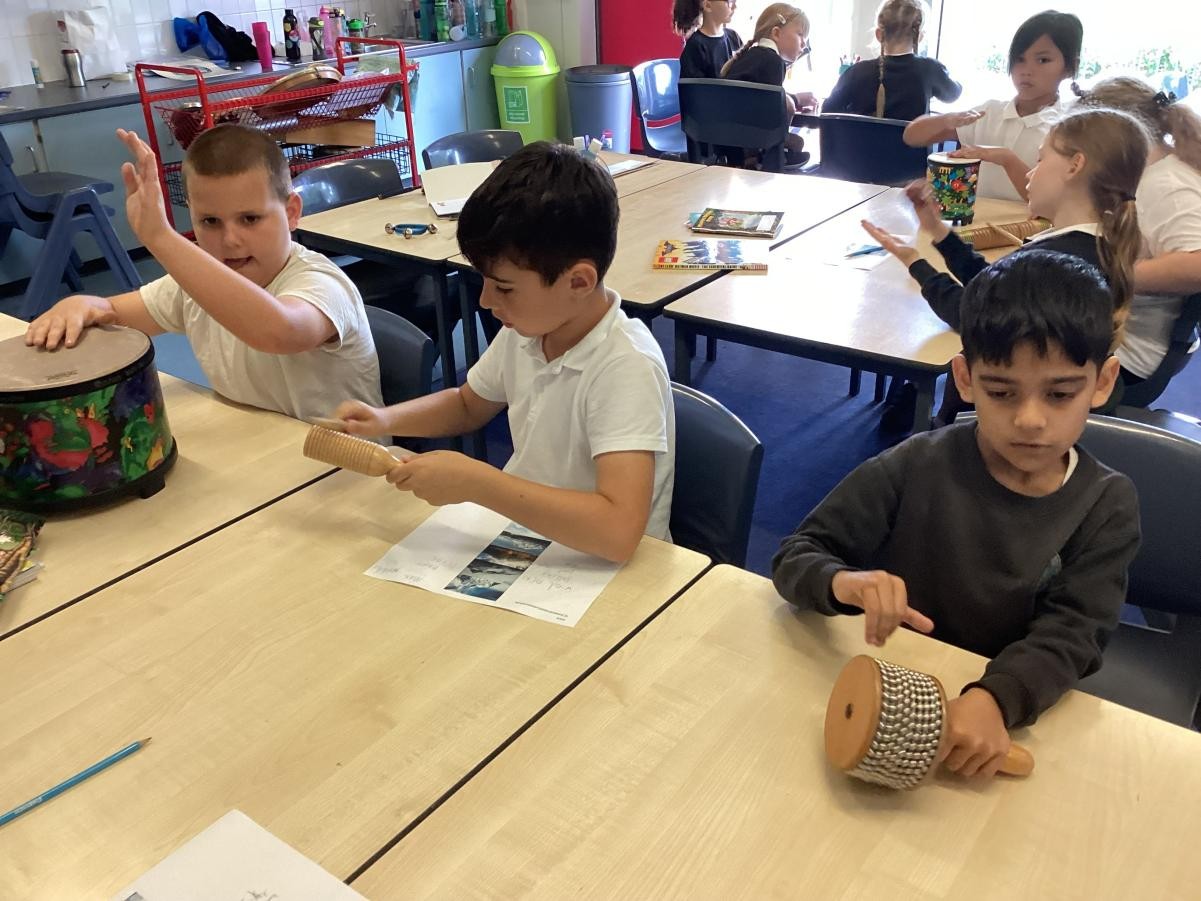
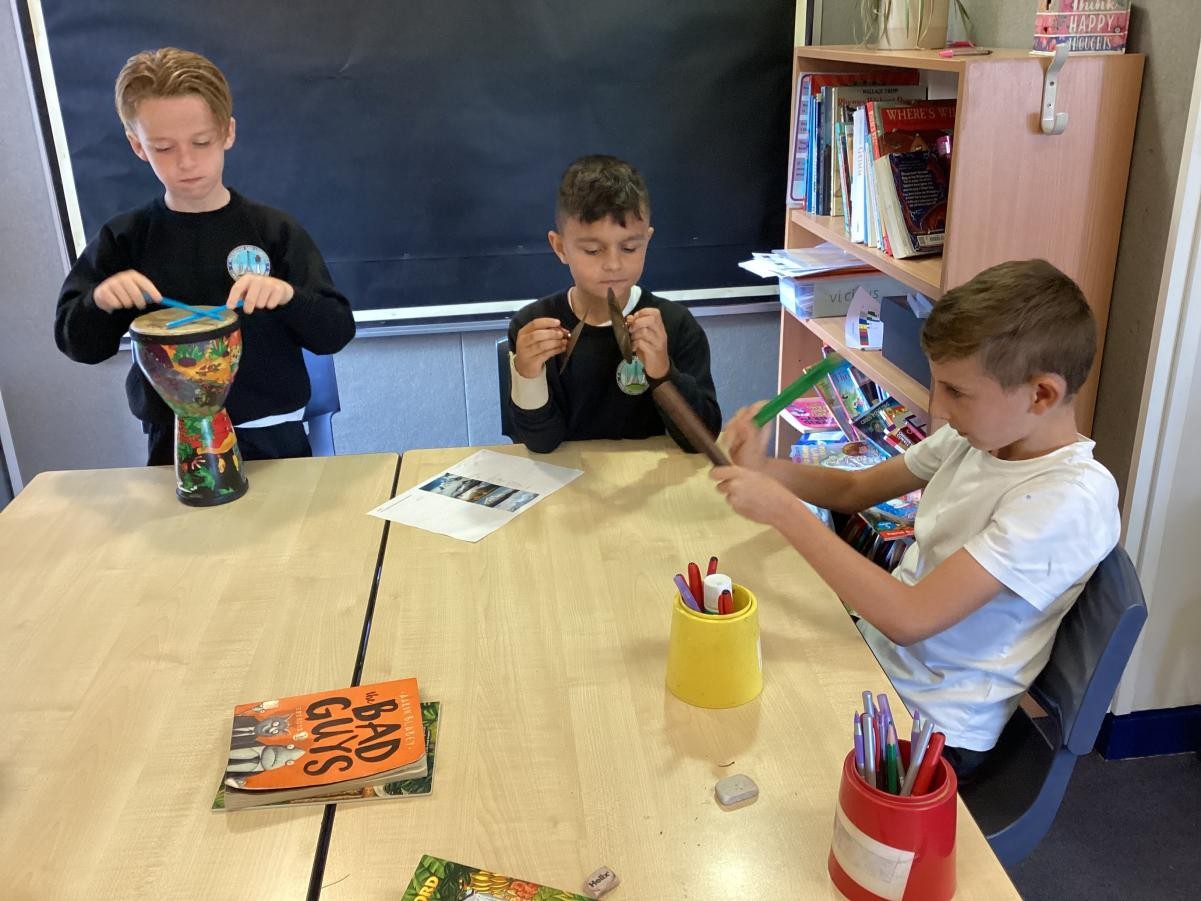
- In African drumming lessons, Year 1 children begin to understand that music from different places can sound different. They learn to maintain a comfortable position when sitting to play the drums, and play the pulse or rhythm by copying the teacher’s modelling. In Year 2, children are taught to produce a clear sound when drumming. They begin to maintain their own part (pulse and/or rhythm) when playing as an ensemble. Year 2 children also encounter the ukulele for the first time. They learn how to sit and hold the ukulele comfortably and effectively and how to produce sound by plucking the open strings.
Key Stage II:
The National Curriculum states that in KSII: Pupils should be taught to sing and play musically with increasing confidence and control. They should develop an understanding of musical composition, organising and manipulating ideas with musical structures and reproducing sounds from aural memory.
- Through units such as Reggae Rhythms: Playing in a Band (Year 3) and Singing in Parts: Loops and Layers (Year 4), lower KSII children listen with attention to detail, focusing on a specific feature of the music. They begin to develop an understanding of the history of a diverse range of music and notice similarities and differences between music from different time periods or cultures. In units including Inspired by India: Musical improvisations (Year 3) and Musical Technology: Loop Based Compositions (Year 4), lower KSII children compose short sequences of sound using given notes or rhythms and begin to improvise melodies using a small pitch range. They explore how the inter-related dimensions of music can be used to improve a piece or create contrast (e.g. changing speed or volume). As part of their lessons, lower KSII perform and maintain an individual part, for example the bass, chords or melody, within a group. They reflect on their own performances and express what went well and what could be improved. Children also begin to recognise and notate notes C to G on a stave, as well as common note values such as crotchets, paired quavers, minims and crotchet rests.
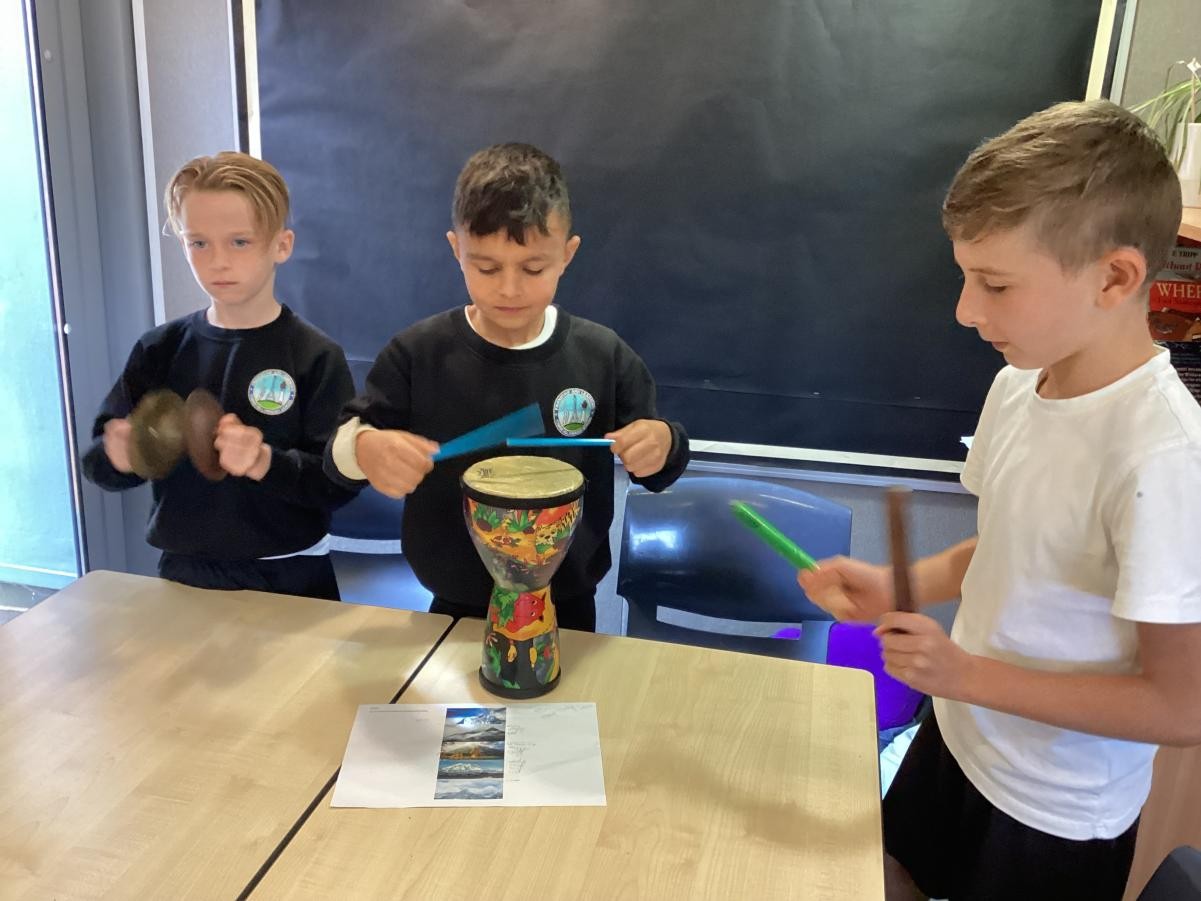
- Children in lower KSII continue to learn and practise African drumming and the ukulele. By the end of Year 4, children play the Djembe drums with increasing control and accuracy, producing a clear sound and distinct pitches (bass. tone and slap). They chant and drum in time with peers, with a degree of accuracy and awareness of their part in the group performance. Lower KSII children use ukuleles to play a harmony by listening and following the teacher’s modelling, first strumming the C chord and then the F chord. They also begin to play melodies using open and fretted strings.
- Through units such as Music in Nature: Chord and Melodies (Year 5) and Songs that Speak: Lyrics and Messages (Year 6), upper KSII children listen and respond to music with increasing independence, focussing on a range of musical features. They describe how the inter-related dimensions of music work together to create contrast and mood, for example ’There’s a crescendo and the music is getting faster to build tension’. They know that music is shaped by historical and social influence and that new musical styles are always developing, often inspired by existing styles. In units including West African Rhythms: Create, play, perform (Year 5) and Music Technology: Film Soundtracks (Year 6), upper KSII children create and compose musical ideas whilst carefully considering rhythm, pitch and notation. They confidently develop melodies and write lyrics to fit a melody, matching syllables to the rhythm. By the end of KSII, children perform confidently and independently in time with a backing track or ensemble and apply simple techniques to improve rehearsal and performance. Children also read and create different forms of notation, recognising how they represent musical elements such as pitch and rhythm.
- In African drumming lessons, upper KSII children confidently maintain the pulse or rhythm when playing in five or more layers. They lead call and response chants and improvise their own short rhythmic patterns within a steady pulse. By the end of Year 6, children play the C major scale on the ukulele using open and fretted strings. They change hand positions to strum a range of chords clearly and accurately.
Impact:
In Music, we monitor and assess the impact of the curriculum on our children in a variety of ways. Monitoring will take place by the class teacher, music lead and member of SLT responsible for music on a regular basis, in the form of learning walks, mentoring, work sampling and pupil conferencing. Modelling and feedback are key components of every lesson. Teachers demonstrate to children what high-quality musical responses sound like and how to achieve those outcomes, as well as providing ongoing feedback to improves the quality of children’s music making. Teachers use audio and visual recordings during and at the end of each unit to assess progress and attainment and to inform future learning. Teachers also record audio and visual feedback on progress and next steps to enable leaders to monitor impact.
Golden Thread:
At Tower Hill we believe that it is vital to children’s development that they have aspirations for the future – that they have something to aim for, something they would like to achieve. Through our Music curriculum and our wider Music provision, we strive for every child to see opportunities for themselves in music, whether that is as a career or a life-enriching hobby. Our children are explicitly taught about jobs in and connected to the music and music technology industries and are encouraged to aspire to creative careers. We offer a wide range of free and paid enrichment activities, such as School Choir, Young Voices and Rocksteady, and prioritise access for those from disadvantaged backgrounds as well as those with SEND. We also regularly arrange visits and subsidised or free trips for children to experience live music and stage performances. Ultimately, we want Music at Tower Hill to enable our children to explore their creativity, nurture their talents and, now and in future, achieve incredible things.